In 2019, one of the basketball player Rudy Gobert’s Instagram post has reignited the enthusiasm of some with many comments. The subject was: Should Rudy Gobert squat given his height (2.16m)? (Updated in 2026)
What Are the Benefits of the Squat?
Squats are a versatile and effective exercise for strengthening the leg, buttock and back muscles. The benefits of the squat are many, here are the main ones:
- Muscle Strengthening: Squats engage many muscle groups in the body, including the quadriceps, hamstrings, glutes, abdominals and back muscles. By regularly practising squats, you can strengthen these muscles and improve your strength and endurance.
- Improved Posture: Squats help strengthen the back and abdominal muscles, which are important for maintaining good posture. By strengthening these muscles, you can reduce pain and tension in the back, shoulders and neck.
- Increased Bone Density: Squats are a resistance exercise that can help stimulate bone growth and increase bone density, which can reduce the risk of fractures and osteoporosis.
- Improved Flexibility: Squats can help improve flexibility in the hips, knees and ankles, which can reduce the risk of injury during other physical activities.
- Increased Fat Burning: Squats are an intense exercise that can help burn calories and stimulate metabolism, which can help burn body fat.
- Improved Athletic Performance: Squats are a functional exercise that mimics movements in everyday life, such as getting up from a chair or carrying heavy loads. By regularly practising squats, you can improve your strength, endurance and ability to perform complex movements.
In summary, squats are an effective and versatile exercise for strengthening muscles, improving posture, increasing bone density and burning calories. By including squats in your regular training programme, you can benefit from these advantages and improve your overall health and fitness.
Who Are the Best Tall Squatters?
Here are some examples of tall athletes known for their squat strength:
- Hafthor Bjornsson, also known as “”The Mountain”” from the Game of Thrones series, is 2.06m tall and achieved a squat of 445 kg in a 2020 competition.
- Don Reinhoudt, he won the super-heavyweight weightlifting championship four times (1973-1976) and the title of world’s strongest man in 1979. He is also one of the few athletes to have achieved a 424 kg squat without assistance equipment.
- Brian Shaw, 2.03m tall strongman, he squats 410kg
Why Is It Complicated to Squat When You’re Tall?
Squatting can be more difficult for tall people for several reasons:
- Body Proportion: Tall people often have longer legs, which can make executing the squat more difficult because they must descend further to reach full depth. This can also affect balance and stability during the exercise.
- Joint Mobility: Tall people may have stiffer joints due to their size, which can make the squat movement more difficult. For example, tall people may have difficulty flexing their knees and hips enough to perform a full squat.
- Space: Squat racks and bars can be designed for people of average height, which can make the exercise uncomfortable or difficult for tall people who need to bend or stretch to access the equipment.
- Risk of Injury: Tall people may be more prone to injury due to increased pressure on their joints during squat execution. It is therefore important to follow good technique and ensure that the equipment is properly adapted to the person’s height.
In summary, tall people can encounter difficulties when performing squats due to their body proportion, joint mobility, available space and increased risk of injury.
The long segments of tall people do not seem suited to performing a movement like the squat. At equal amplitude, tall people must have more angle in their main joints such as ankles, knees and hips. And it’s often there that the problem lies: joint mobility.
It is impossible for a tall person to perform a traditional full-amplitude squat if they do not have the necessary mobility, especially in the ankles. If you cannot squat down without needing your arms to balance yourself, you are not ready for the full squat.
Your morphology will also affect your movement. If you have proportionally larger limbs than your back you will be disadvantaged.
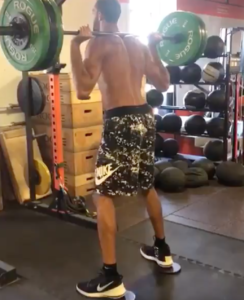
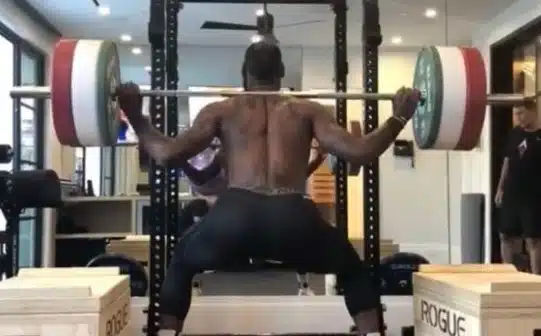
What to Do to Squat When You’re Tall?
Since the squat is one of the pillars of weight training, it seems important to work on certain weak points in order to perform this movement. Let’s discover together the main areas for improvement:
1/ Improve Ankle Mobility
Regularly working on ankle mobility through a squatting position or duck walking will allow you to start working on the full squat. Be consistent in your practice, and maintain a full squat position in complete relaxation to improve your mobility. You can also regularly rotate your feet through their full range of motion which will help.
2/ Do Half Squats
The half squat involves stopping the movement when the femur is parallel to the ground. This is not necessarily easier because the knee finds itself in a position of maximum pressure. Pressure that is exacerbated by the length of the individual’s segments. The debate between the usefulness of the full squat or half squat continues to rage in specialist circles but no exercise seems to be better than the other. They each have their specificity and offer slightly different results. It’s a good alternative for inflexible tall people who want to load the bar (safely, of course). In any case, make sure your feet are far enough apart that you don’t have to lean your torso too far forward.
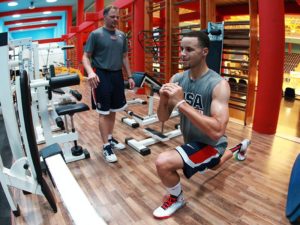
3/ Try Reverse Lunges
Reverse lunges, with or without weights, are an excellent way to work the same muscles as the squat. The other advantage is that you will benefit from working on one leg which has more practical applications in sport. Whether in running or team sports, we find ourselves more often making effort on one foot (movement/running) than on two, static jump.
4/ Try the Goblet Squat
Same principle as before but instead of a bar we take a kettlebell or dumbbells that we hold either one weight with both hands or one weight in each hand. If practising with two hands in front, make sure to spread your legs apart.
5/ Let Yourself Be Tempted by the Air Squat
If you are a beginner it may be preferable to start with empty squats called “Air Squat”. Performing them at full amplitude should improve your mobility and develop the strength you will need to lift a bar. If it’s too difficult for you, stop halfway and go back up. Gradually you will go further and eventually be able to add weight.
6/ Test the Guided Load Squat
There are also machines allowing you to perform squats in a more “”safe”” manner. This machine guides the bar along an axis and allows you to put the bar down at any time. This is also a good solution for those who want to lift heavier.
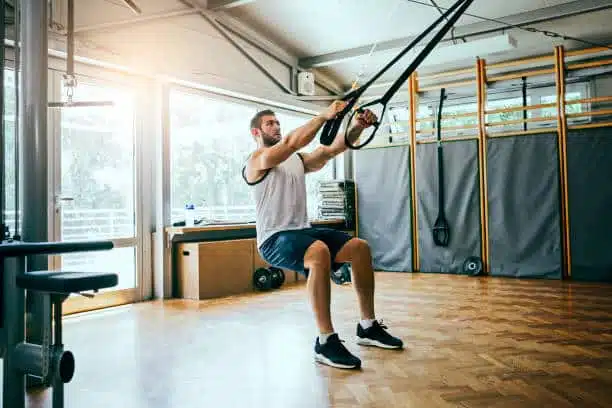
7/ Let Yourself Be Convinced by the Strap Squat (TRX Style)
Straps are also an interesting alternative, especially for beginners. TRX-style straps are generally offered in a Y shape but two straps attached together produce the same result. The idea is to do squats while holding these straps (there are handles at the end). This allows you to reduce the load to be lifted and vary the angle of push. There are countless variations. You can also continue with a weighted vest to increase difficulty. Or on one leg.
8/ Work the Step Up
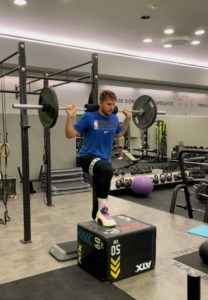
The step up consists of stepping onto a box or step that is more or less elevated. You can perform the movement with or without weight. This movement is excellent because it also works balance and daily life exercises.
9/ Dare the Bulgarian Split Squat
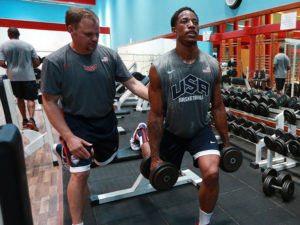
Behind this twisted name hides an excellent exercise for effectively strengthening the thighs, glutes and back. You can do it with or without weight, depending on your level. Weights can be held in each hand or on the back via a bar.
10/ Test the Spanish Squat
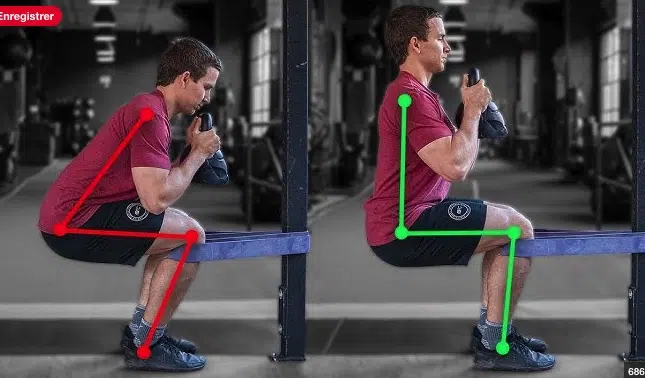
This little-known solution consists of holding the knees with a TRX or elastic bands to hold the knee and prevent it from going back. By doing this, the practitioner can lean further back and thus keep a straighter back. This exercise can be done at different levels depending on the weight. It is really effective for focusing effort on the quadriceps and relieving the back.
11/ Explore Other Solutions
There are other tricks for squatting when you’re tall. For example with a Swiss ball against the wall. Or by wearing heel lifts to gain angle or by spreading your legs with toes pointing further outward.
Also take a look at Roland’s advice, a Coach specialising in tall people in the article where he presents exercise videos adapted for tall people!
Many weight training specialists have already looked into the subject and have suggested articles or videos. You will find many other solutions in the following videos: